Calculus
Section 1.3 Things
Inverse Functions
Suppose we had a function where \(f(-7)=11\). Is it possible to start with \(x=11\) and get back \(-7\)? When this is possible, it is called the inverse function. This brings two questions: When is this possible? and What is the inverse function?
When does an inverse function exist?
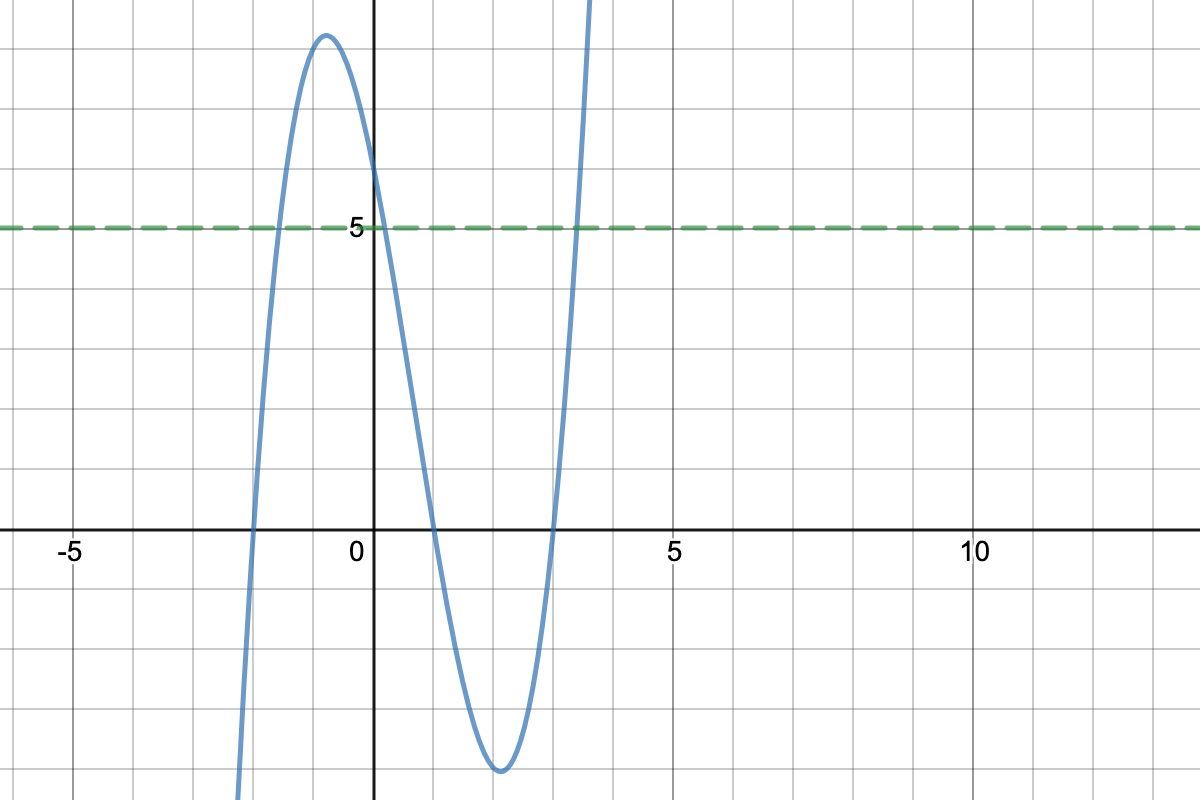
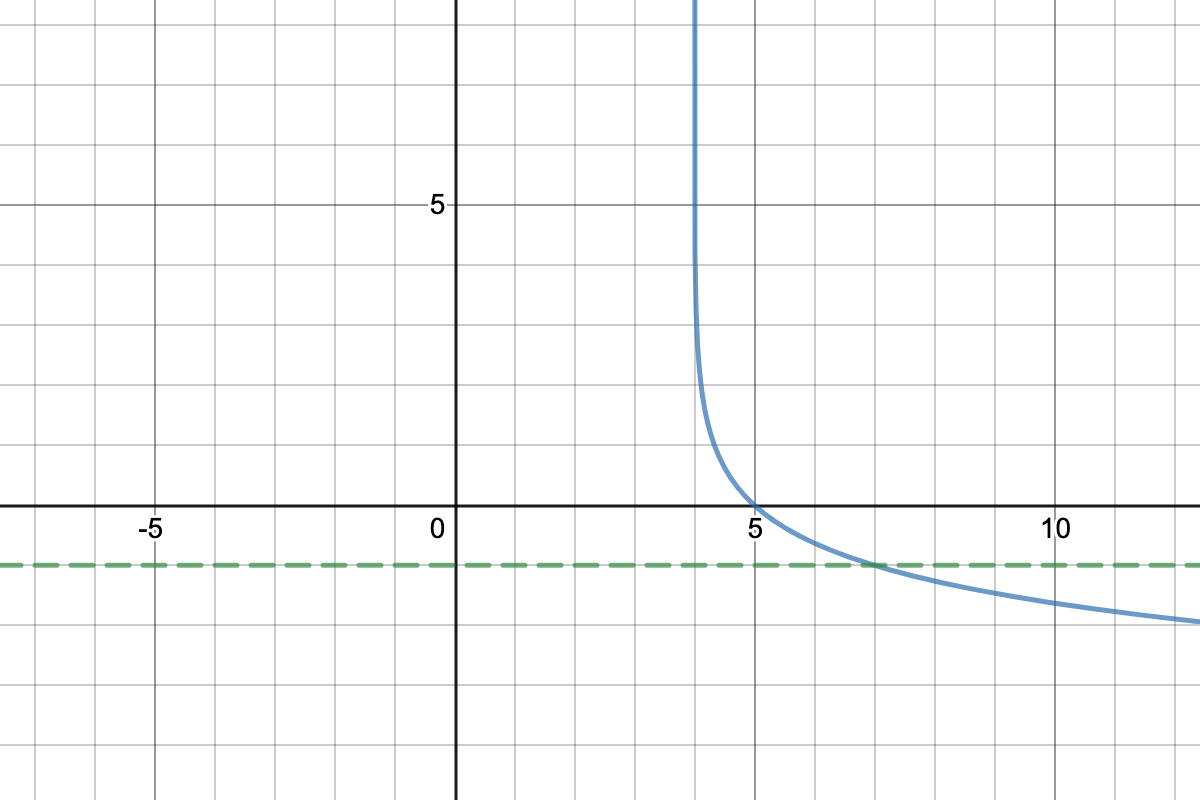
The inverse has to be a function as well to avoid something like \(f(5)=12\) and \(f(-5)=12\). This would lead to the inverse having \(x=12\) for \(y=\pm5\), and that violates the definition of a function!! To avoid this scenerio, an inverse will exist when each \(x\)-value has EXACTLY one \(y\)-value. This is called a one to one function, and there is an easy way to test for it. Consider the following graphs:
 |
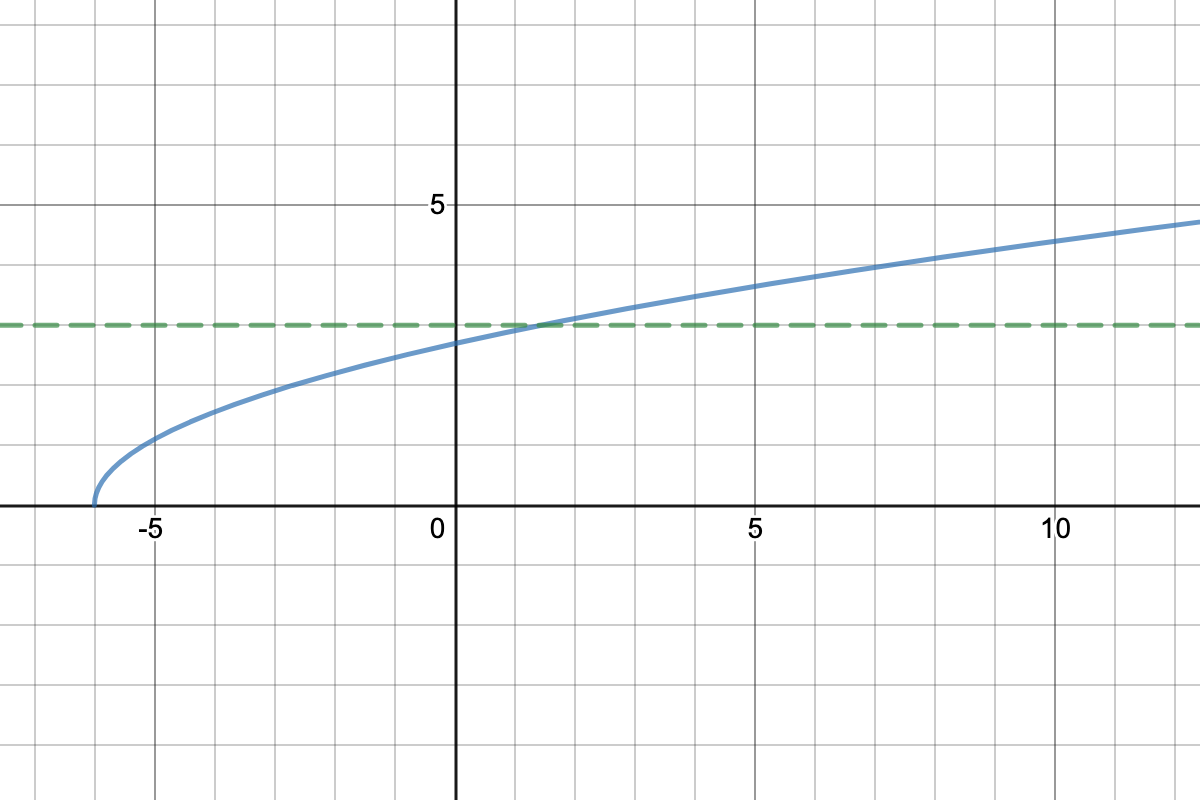 |
| Not one to one | One to one |
 |
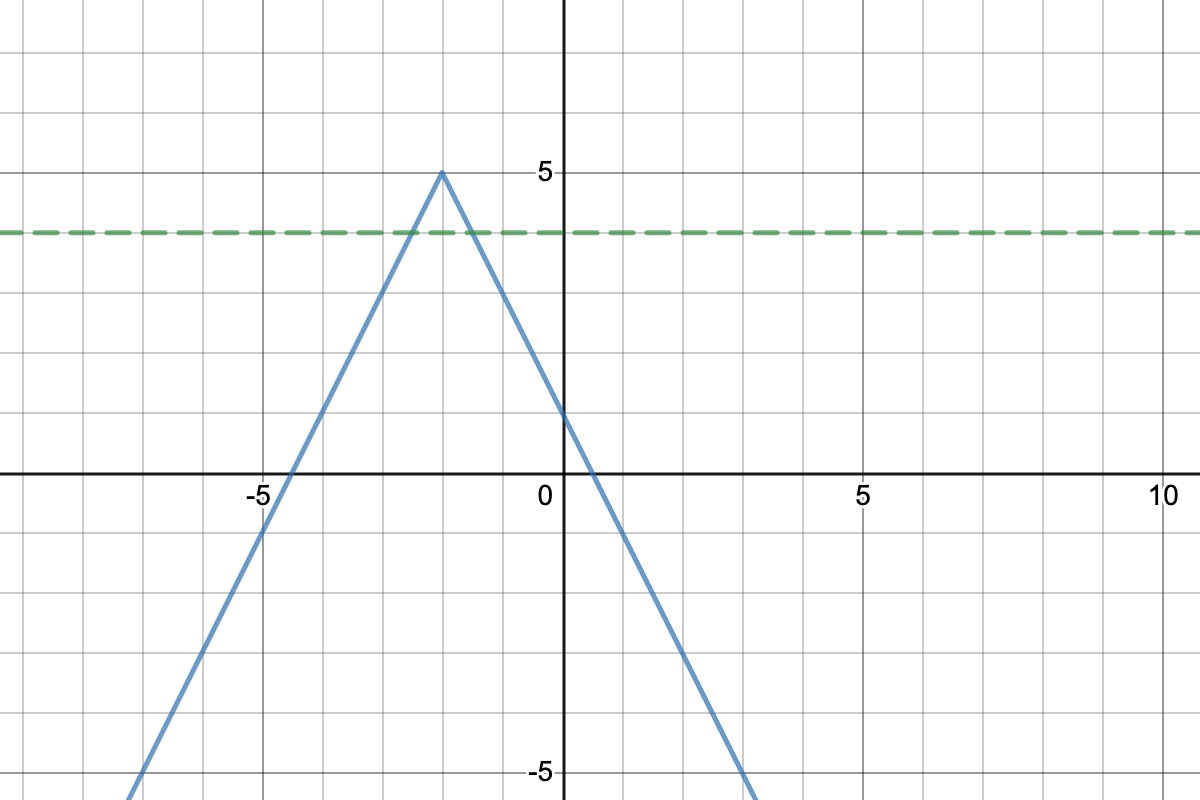 |
| One to one | Not one to one |
Did you figure out what is going on yet? It is called the Horizontal Line Test. A function is one to one if it passes the Horizontal Line Test, so an inverse then exists.
How do we find the inverse function?
Finding an inverse is a very procedural thing to do, and may require some high powered algebra to complete. Below is the step by step procedure:
| Step 1: | Write function in \(y=\) form |
| Step 2: | Switch the \(x\) with every \(y\) |
| Step 3: | Algebraically solve the equation for \(y\) |
| Step 4: | Replace \(y\) with \(f^{-1}\) |
Example Find the inverse of \(f(x)=(x+5)^3-4\).